Deconstruct Reconstruct Abstract for Painters
Monday 3rd August 2026 for 5 days — Cost: £350
Tutor: Jane Strother
Bookings for this course have now ended
Course Description
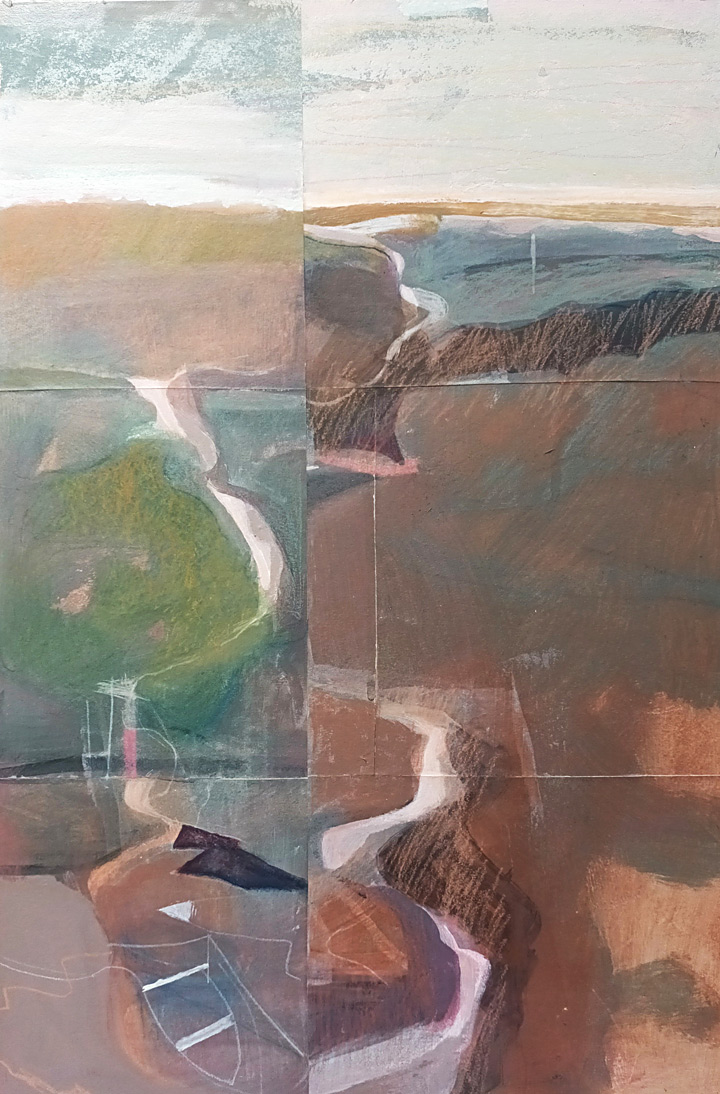
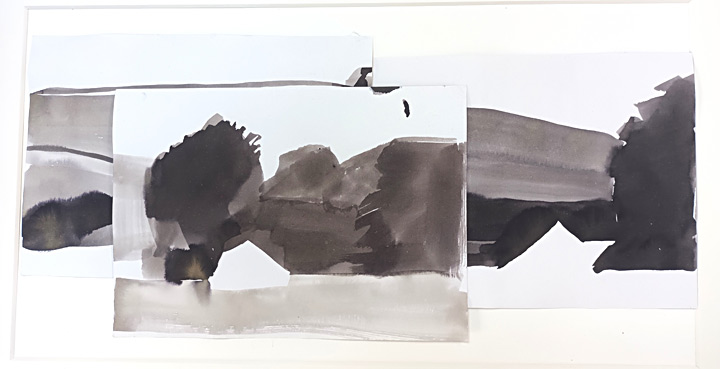
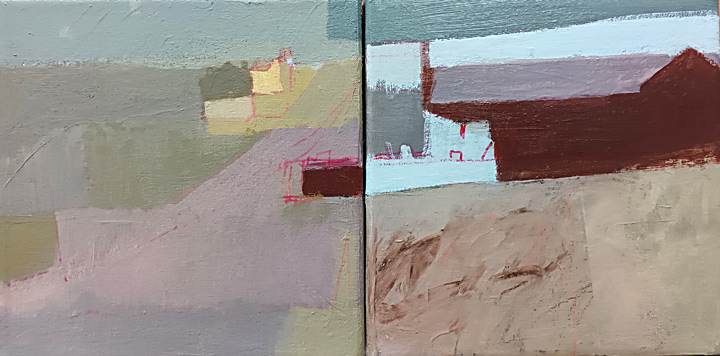
This course is new for Summer school and takes elements from my online workshops, of the same name. You will be deconstructing, reconstructing and abstracting in the process.
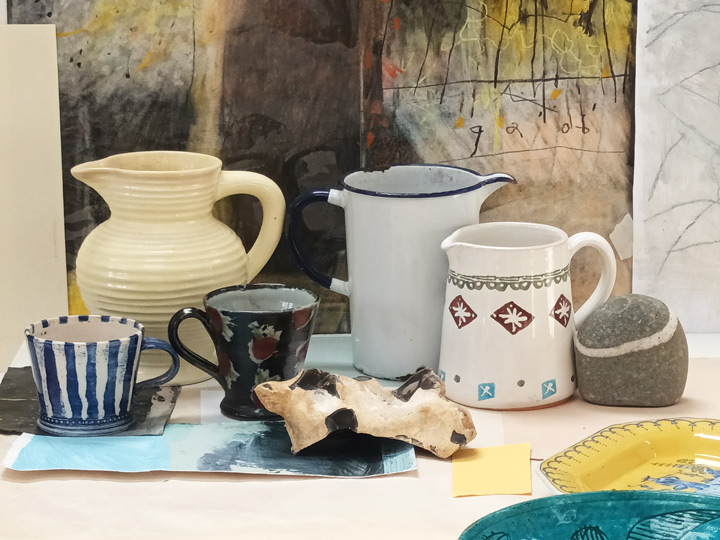
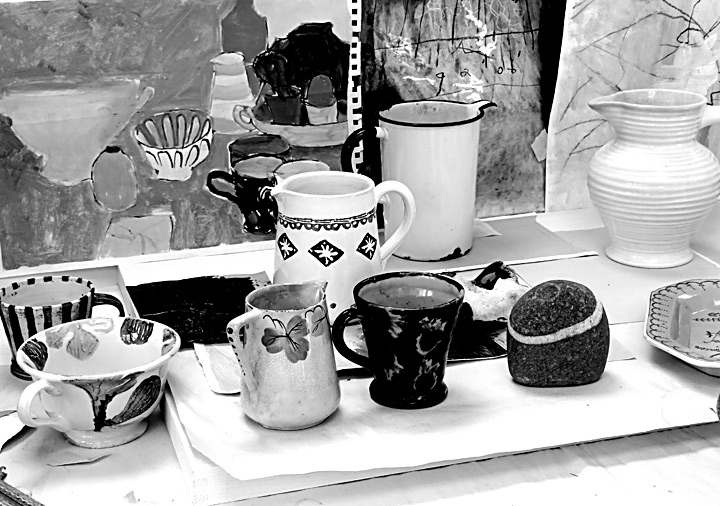
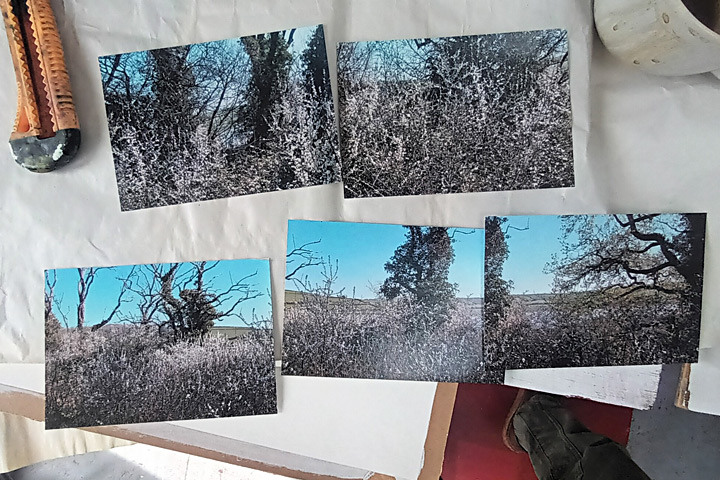
Subject matter will include both observational drawing from life (I will ask you to provide one or two simple objects to work from) and landscape, from your own resource material. The idea is to simplify or pare down imagery to component parts and to put them back together again! Not so straightforward maybe, but a way to capture your ideas in an abstract piece – interesting, thoughtful and fun.
You will be drawing and painting, cutting and fitting together, learning about colour and composition.
Suitable For
This course is suitable for people with some painting experience, ideally in acrylic or oil. You do not need to be amazing at drawing but you do need to be willing to find yourself out of your comfort zone!
Preparation
Gather together your resource material. Remember you will be working with this for a week so choose carefully. To begin with you will all need a few simple objects, jug, cup, tea pot or similar with a little variation in shape. Look for the lip of a jug, an interesting handle. You might include a pear, apple or other fruit or vegetable.
Landscape drawings and photos can be new or you might like to work further with material you already have. Make sure you have plenty of it.
Requirements List
You will need a range of materials as we will be collaging, drawing and painting, cutting up, taping together. You do not necessarily need everything.
Drawing:
This is a list of all you might possibly want. The highlighted items are the most necessary.
- Charcoal – compressed and willow, graphite stick, pencils, black drawing ink, chalk pastels, oil pastels, pastel pencils, biro, fibre tipped pens
- Paper towel or rags, rubber – ideally not a putty one, twigs cut from garden to use with inks, dip pen
- Drawing board at least A2 if at all possible. Something smaller to lean on for moving around the room
- Drawing paper –medium weight paper, 120g A3
- A larger pad which can be cut down if necessary is useful. That way you can use sheets of differing scales and sizes. You’ll need plenty
- For a longer drawing and for painting, 200g plus is nice to use, you’ll need A2 or larger
- Masking tape (low tack is good), scissors or craft knife, tracing paper
- Pritt stick or similar (later on you will need some glue to stick down collaged painted paper
Painting:
- Acrylics are best or gouache but not watercolour
- Water soluble oils with water or vegetable oil to clean up, can be used but you MUST be in charge of your cleaning process. The sinks are not art room sinks and should be left clean at the end of the day. All excess paint whether acrylic or oil should be scraped into paper and put in the bin, not washed down the sink (No solvents).
- Acrylic paints. The basic range requires the primary colours 2 x yellow, blue and red. For example
- Cadmium yellow, lemon yellow
- Cyan blue or a blue turquoise and cobalt or ultramarine
- Crimson or magenta, cadmium red
- White - plenty
- Other ‘made up’ tubes of your choice which may include earth colours and one of two specific hues
- Acrylic medium matte or gloss basic medium
- Paper – It’s best to have a large pad so you can cut smaller or use large, something that will do for both painting and drawing. You might like to work on a canvas or board later in the week or use a heavier paper. The quality and weight of paper is really not too crucial for the work we will be doing. It is nice to work on quality stuff but it can also be inhibiting!
In addition:
- Rubber
- Craft knife or scissors
- Pencil sharpener
- Different sized brushes for painting
- Glue - acrylic gel medium is good for this or Mod Podge – but ordinary acid free pva glue is adequate
- Masking tape
- Water containers
- Kitchen roll or blue roll for cleaning up
- Palette, the larger and flatter the better (can be taped down plastic sheet or shiny paper)
- Ppalette knives
Optional:
- Tracing paper
- Easel is good to have. I can lend 4 metal ones on a first come first served basis
- Large drawing board as large as possible. Piece of plywood? Bring if at all possible
- This might be for working on and for propping up with drawings stuck to it, for reference